Showing posts with label London. Show all posts

Thursday, 11 August 2011

A Tale of Two Curries


       The Gulshan Tandoori restaurant is located on Exmouth Market, nestled among many restaurants and cafes, directly across the street from another Indian restaurant called Cinnamon Tree. One night, my flatmates and I found ourselves craving Indian food and decided to try Gulshan, since we had already eaten at Cinnamon Tree the previous week. I had walked by Gulshan many times before, and it’s never been that busy, even when other restaurants on Exmouth were filled to capacity.
       Standing outside of the restaurant, we were greeted by a kind looking Indian man with white hair, a beard, a crisp white shirt, and a small black cap. I would later learn that this man was Ahman, the owner of the restaurant. He appeared to be in his mid-fifties or early sixties and was of average height and build. He leaned over our shoulders as we read the menu. Then, he looked both ways and leaned in closer. He put his hand to the side of his mouth and whispered, “Half price for you, anything you want.” He seemed to think we were getting away with a crime by eating so cheaply. He might as well have said, “Please, eat anything you want. Just don’t hurt me.” I was happy to get such a good deal, but I also realized how hard it must be for Ahman to attract customers when there is a nearly identical restaurant across the street.
       We sat down and he unfolded our menus and gave his recommendations. As he smiled at us, the wrinkles around his kind, dark eyes became more clearly defined. He was eager to please us, and I felt welcomed and appreciated as a customer. Our food arrived shortly after we ordered. I had vegetable samosas as an appetizer. They were filled with lots of herbs and spices, and the vegetables were very flavorful. For my main course, I ordered a chicken dish in a spicy curry sauce. The spice was intense, but was subdued by the yogurt sauce that was served on the side. Even though I don’t eat Indian food often, the chicken at Gulshan is the best Indian dish I’ve had so far. Ahman brought us two orders of rice, even though we only ordered one. He explained that the extra rice would be free of charge. He wanted to make sure we tried both the fried mushroom rice and the rice pilaf; the latter is plainer but just as delicious. Throughout our meal, Ahman kept checking in on us to make sure we had everything we needed. By the time our plates were cleared, we hadn’t left a single bite of food on the table.
         When Ahman returned with our check, he asked us where we were from. We explained that we are Fordham students from New York, and he asked about our impressions of London. After telling him how much we loved it, he replied that he had opened the restaurant thirty years ago after moving to London from India. At that time, Indian restaurants were mostly contained to Baker Street, so it was a risky move to open up shop where he did. Ahman noted how Indian restaurants are now all over the place. He pointed across the street and told us that the owner of Cinnamon Tree had worked for him for fifteen years. The man left Gulshan to open his own restaurant, but failed to tell Ahman that he would be right across the street. To add insult to injury, Cinnamon Tree has almost the same menu as Gulshan. The man had learned how to cook from Ahman, and now he is his main competition. I was shocked at how casually this story had unfolded. The story was filled with betrayal and irony, curry and naan. Ahman didn’t seem too upset about it, but he did mention how hard it was to be in the restaurant business. I felt badly that someone he had once trusted had taken advantage of him, and now both restaurants suffer the consequences of being located so closely to each other.
      Meeting Ahman taught me the importance of learning who I am supporting when I dine out. For thirty years, Ahman has not given up despite hard times and tough competition. I’m glad I was able to support his restaurant because I know he is passionate about what he does. It’s rare to stumble upon a restaurant with a friendly owner who is more than happy to have you there and willing to talk to you instead of staying cooped up in the back room. I wonder how many other restaurants are like Gulshan, and if their owners have struggled as much as Ahman. Even if there are, I doubt I’ll find one with such an amazing chicken curry.

Wednesday, 3 August 2011

To a Crisp


         London has a long history of fires. The city has been burned more times than a middle school girl with detachable headgear. For me, this is particularly troubling because I’ve always said that when I go, it’ll be a fire that does me in. Sending me to London is like letting a gazelle walk through a field of lions. I didn’t stand a chance, especially with my pasty skin and visual impairment. I knew it was only a matter of time before the flames of London devoured me, leaving only a crispy pair of glasses behind. So far my morbid theory has been put to the test a few more times than I’m comfortable with, starting with my visit to the Tate Modern.
     I wouldn’t want to be caught dead in the Tate Modern, but I almost was. The building itself is as ugly as it is tall. The Tate is a brown, windowless industrial building and it looks as though it would be better suited as an orphan-run Indonesian shoe factory rather than an acclaimed modern art museum. However, I had some time to kill, and the Tate looked like it was familiar with killing.
      As I found myself wandering through the different exhibits, I was happy I had stopped in. The art wasn’t anything to write home about, but I particularly liked the Diane Arbus photography room and planned on stopping in the gift shop to pick up a book with her photographs. Mainly, I was happy because I knew a few hours at the Tate were all I needed. The completeist in me was satisfied. Finally, I could visit a place and leave without thinking about how I would have to get back there at some point to soak in all the things I had missed the first time around. The Tate Modern would officially be crossed off my to do list.
      After I had seen some riveting “art” such as the giant pile of sunflower seeds and an assortment of scatological structures, I found myself in the “States of Flux” room on the fifth floor. This was the last room I had wanted to see before making my way down to the second floor café to grab some lunch and then topping off my visit by checking out the museum gift shop. I was standing next to some large structure spewing out pieces of paper filled with CIA intelligence written in different languages when I heard a loud sound. It was some type of alarm. At first I though the alarm was part of the exhibit, after all, I was in the “States of Flux” room. I figured this was just some crazy artist’s idea of groundbreaking artwork. I was more annoyed than impressed. Obviously, this artist hadn’t seen the giant pile of sunflower seeds. Now there’s some great “art.”
      The alarm got louder and I noticed the lights started flashing. Once a museum worker came in and told us to evacuate, I knew I was done for. There was no reason to take this lightly, especially with London’s highly flammable history. I knew I had to get out of the museum as quickly as possible. I ignored the museum workers who ushered me to the fire stairs. Instead, I made my way for the regular staircase.
       The alarm provided an all too fitting soundtrack as I barreled down the stairs. Four more floors to go, I knew my chances of survival were slim. Is this how it ends? In an ugly building that looks like an orphan run shoe factory?
        As I shoved elderly people and children out of my way on the cramped staircase, I envisioned my crisp body lying on the front of the museum’s lawn as police struggle to identify my body.
    “The only thing we were able to recover off of this one was the glasses.”
     Then my body would be thrown in a dumpster in order for the police to avoid the burden of another unsolved case. My classmates would ask questions about my whereabouts for a few minutes before becoming distracted by the ice cream cart adjacent to the museum. My dad got a boat this summer, and I’m convinced he hasn’t noticed that I’m even gone. He probably thinks I’ve been up in my room or at a friend’s house for the past three weeks.
      But as I reached the third floor, I realized the worst part of this whole thing. I hadn’t seen the café or the gift shop. The OCD part of me had to do both of these things before I inevitably became engulfed in flames. I had heard good things about the café, and I couldn’t pass it up. What type of food did they have? I would never know, I had to at least go by and glance at a menu, even it meant mild smoke inhalation. And how could I possibly cross the Tate off my to do list without buying a souvenir at the overpriced gift shop? Perhaps I could hop over the flames in order to see if the shop carried any Diane Arbus books.
       My flame retardant plan disintegrated on the second floor when I was halted by a museum worker. I was told, rather sternly, that I needed to use the fire stairs. Maybe the fire stairs would have a café menu posted on the wall. At least then I could see what I was missing out on. No such luck. I had decided to visit the Tate the same day that it would burn to the ground.
     As I made my way safely outside of the museum, it didn’t seem as though there was any real danger. Really? I had to leave before seeing the gift shop and there wasn’t even a real fire? All of this was for nothing? I would’ve felt a lot better if the whole museum burned to a crisp, except for the café and gift shop, because I still haven’t seen them yet.
        About a week later I was leaving to go out to dinner when the fire alarm in the apartment building went off. I was on the first floor landing and I saw the control paneling listing all the flats. Flat 15 had a red light next to it, and above that the word “FIRE” was lit up in red. This was it; this is how it would end. The Tate Modern was just a fluke, but now the apartment building would burn for sure. As I climbed the stairs back up to my apartment I could smell something burning. It was go time. I rushed into my room and stuffed my laptop and passport into my backpack. I considered what items needed to be saved. As I was leaving the apartment, I was told that someone’s phone charger had caught on fire. I still left the building, since the alarm was deafening.
       There was a small group outside, and as we gathered around, the gentleman who had started the fire began laughing with his “bros.”
       “Dude, I like started a fire,” he laughed.
       Oh, thanks for apologizing for the massive inconvenience. I’m glad you’re enjoying yourself you inconsiderate tool.
      I can’t say that I was surprised. The universe is teasing me with these false alarms, but eventually the real flames will catch up to me. So far, I’ve been careful to avoid anything that could possibly cause a fire. I’ve used my chargers as minimally as possible, I’ve avoided carrying containers of gasoline, and I’ve suppressed the temptation to use a waffle maker. But there’s no denying that by the end of this trip, there will be nothing left of me except for my crispy glasses. I wonder if I should just go ahead and cancel my return flight home. The eternal flames of London loom over me and make me sweat in fear. Good thing I brought extra deodorant.

Sunday, 31 July 2011

Where's the Beef?


          After a long day walking through the Camden (on the same day Amy Winehouse was found dead in her Camden home, just to be clear: I was not responsible), all I wanted to do was sink my teeth into a nice, thick juicy burger. This simple desire seemed completely reasonable and attainable. I sat on my friend Sara’s bed as she searched through “London’s Top 10 Burgers.” I wanted them all and I wanted them now. Although the list of burgers was impressive and appetizing, I had my heart set on the Gourmet Burger Kitchen. 
        As I was reading the menu on the restaurant's website, I knew I had to get the avocado bacon burger, cooked medium rare with a side of onion rings. This particular burger kitchen was located near St. Paul’s. Perfect, I thought. We can take the central line to the St. Paul station and walk from there. Unfortunately, Sara had her mind set on walking, and I know better than to cross Sara when her mind is made up. I was tired, but I could walk knowing that there was a purpose to it. A delicious, juicy goal was waiting to be devoured. The walk should have taken about 15 minutes if we had known where we were going. We did not.
     After a few minutes of directionless wandering, we decided it would be best to ask someone for directions. The security guard at a posh clothing store did little but confuse us more. He had no idea what we were talking about, and I could barely understand what he was saying. Security guards are supposed to know everything, especially the location of the nearest Gourmet Burger Kitchen. When I’m done writing this, I should have a talk with his supervisor. I then decided to try to get a WiFi signal on my phone. I’m in the middle of one of the biggest cities in the world, I thought, there must be free WiFi somewhere. Obviously, the universe was playing a cruel joke on me because I found it impossible to connect to the Internet. No Google Maps, no web browser, not a single luxury. It was just like Gilligan’s Island.
   The cashier at a convenience store also proved to be unhelpful. It had been almost 25 minutes since we left the apartment. I needed that burger more than I can articulate. We were tired, and had no idea where to find our burger Mecca. We began walking more and the inevitable began to happen. Anthony suggested we try another restaurant. Sara suggested we turn back and go to the apartments. I couldn’t bear to do this, no burger left behind. At this point I began to go to a very dark place. My hunger manifested itself in strange and unusual ways. I began screaming and gnawing at my jacket. My hands were clenched tightly as my fingernails dug into my sweaty, frustrated skin. It wouldn’t have taken much longer for me to run up to the nearest pedestrian and begin feasting on their flesh.
      I felt as though I would never eat again. I would die right there, on the corner of Cannon and New Change. Perhaps there would be a memorial on the corner reading, “Here lies Christopher James Williams, all he ever wanted was a avocado bacon burger cooked medium rare with a side of onion rings. He bravely died on this corner from a severe case of hunger madness.” The city would be so moved by my story, they would build another Gourmet Burger Kitchen right on that spot so that history need not repeat itself and take any more innocent lives.
      As I prepared to lie down and accept the cruel fate the world had served up, Anthony called one of our roommates who looked up the directions for us. Oh, ok. Maybe my situation wasn’t as bad as I had made it out to be. After walking about 2 minutes, we saw it. It was in the most obvious spot that it could’ve possibly been in. There it was, right across the street from St. Paul’s Cathedral. I placed my order with an unrivaled enthusiasm, sat down, and let out a sigh of relief. Before this journey, if someone had asked me what my favorite part of London was, I would have said just exploring and not really knowing where I’m going. However, if there’s a goal in mind, especially a medium rare avocado bacon goal, I've learned it’s better to know how to get there and the fastest way to do so. 

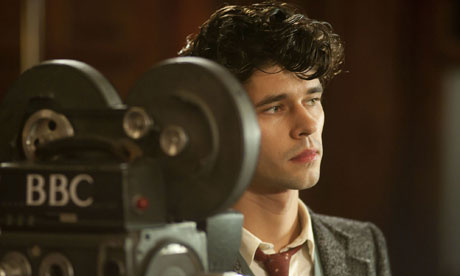
Reviewing BBC’s “The Hour”


         Shortly after making the wisely hermitic decision to watch more good ol’ British telly, I heard about “The Hour” and I was immediately intrigued. I admit the hook for me was the fact that it has been touted as “British Mad Men” and also that “Wire” alum Dominic West holds a starring role. Upon learning that the show is about journalists, I knew I would be tuning in. Although it took me a week after the premiere to watch it on BBC’s online player, for the most part, I was impressed with what I saw.
        “The Hour” centers on the BBC newsroom in 1956. For the time period alone, the series has been inevitably been compared to “Mad Men.” Yes, the costumes and time periods are similar, but “Mad Men” and “The Hour” are very different. “Mad Men” is a quiet character piece while “The Hour” features a faster paced thriller aspect. In fact, “The Hour” more closely resembles AMC’s short-lived series “Rubicon” which centered on an intelligence analyst who slowly works to uncover a conspiracy.
      The premise of “The Hour” features journalist Freddie Lyons (Ben Whishaw) gunning to secure a news series of his own in which he can tell the “real” stories. Lyons is fed up with the cushy superficiality of the BBC News, and decides he needs to reveal the darker, truer stories to the public. Along side Lyons is Bela Rowley (Romola Garai), a seemingly long time colleague and friend. The two banter and bicker a bit, but in the end they share the same goal. As Freddie explains his vision for the new series to a higher up at the BBC, he describes it as “the hour that people won’t want to miss,” and suggests that he be in front of the camera since Bela is already behind the scenes as the producer of the program.
       But the men running the stations have a different idea about who should be in front of the camera. They choose charismatic Hector Madden (West) as the new program’s front man. He clashes with Bela, although there seems to be some type of love triangle being put into place between Freddie, Bela, and Madden. I don’t find this particularly interesting, and is heading into the cliché love triangle formula that TV lovers know all too well.
       Additionally, Madden acts as the mouthpiece for the heavy-handed sexism that feels shoe horned into the script. The show’s writers used this to beat it over the audience’s heads that the show takes place in the 50’s. As if it isn’t obvious enough by the costumes and props, the contrived social commentary is a poor attempt to highlight how workplaces have changed in the past 55 years. It is clear that the writers are trying to contrast Freddie’s radical, forward thinking ideology to the older, more conservative Madden. There are more subtle ways for the writers to do this, and hope they figure out how in the remaining five episodes.
     The episode also introduces a parallel murder mystery/conspiracy story that is tied into Freddie’s quest by the episode’s end. Freddie’s sister alerts him that a professor has been killed and that there is more to the story than meets the eye. How she knows this information is not made clear, and it seems a bit too convenient that she is around to blurt out a bunch of information to Freddie and send him on a mission to figure out what is going on. She is nothing more than a MacGuffin, and the series gets rid of her by the end of the episode.
     For now, “The Hour” is interesting enough for me to check out the next 2 or 3 episodes. I’ll reserve a lot of my judgments until we’re a few episodes into the series; since the mystery storyline is just beginning and we’re still getting to know the characters. Even though I’ve only seen the first episode, I found myself very much enjoying Whishaw’s performance as Freddie. I think if the show can rely less on West, then the series could be worthwhile and less contrived. Overall, though, I’d say “The Hour” is worth a look for anyone interested since it has the potential to become a compelling and interesting series. So go ahead, tune in Tuesday nights at 9 on BBC 2. And for those of you in the States, the series premieres August 17th on BBC America.

Wednesday, 27 July 2011

Great Expectations


      The night before our class trip to the British Museum, I sat on my bed and read the section in Rick Steve’s guide to London in which he writes extensively about its many attractions from the Rosetta Stone to the Elgin Marbles to countless other ancient artifacts. The ancient exhibits looked impressive, but I felt removed from Egyptian statues and African tools. As I glanced over the guide’s summary of the museum’s Reading Room I saw that an impressive list of writers including Mark Twain, Virginia Woolf, W.B. Yeats, Oscar Wilde, and Arthur Conan Doyle had used the room. I couldn’t think of any other place I’ve ever visited that had such a rich literary history. It would be amazing to write in the same room as these writers, I thought. I wondered if anything in the room had inspired them and if the same inspiration would come to me when I visited.
     My mind conjured a specific image of the space. I envisioned floor-to-ceiling bookshelves filled with leather-bound books and a massive sitting area in the middle. Perhaps there would be a roaring fireplace and a large chandelier. I knew the room must be elegant enough to have been worthy of the legendary writers. It would have to be a lot nicer than my local library at home in NJ, which I’m convinced is an undercover halfway house for convicted felons.
        The foyer of the British Museum is a bright clean white filled with natural sunlight from the glass ceiling. The Reading Room is the geographical heart of the museum and is located in the very center. From the outside, the Reading Room is massive white cylinder, shooting up to the enormous glass ceiling. Two sets of curved staircases hug the Reading Room, leading to the upper floor of the museum. As our group dispersed, I made my way to the Reading Room. After walking around the cylinder on the ground floor, I found no main door to get inside. Next, I went upstairs, certain that the entrance would be at the top, but the only thing up there was an expensive restaurant. I briefly wondered if Virginia Woolf and Oscar Wilde had ever shared an £8 burger there. Acknowledging the impossibility of this, I became disheartened and confused. I had admired these writers for so long, and now I wouldn’t be able to be inspired by the room they had once used.
       Somewhere between considering buying a burger that Yeats may or may not have sampled and reaching the bottom of the long spiral staircase, I realized that my experience was similar to the craft of writing. Writing is a search, an exploration. For me, the goal of writing is to achieve the greatness of the authors that once used the unreachable Reading Room. This goal, for the time being, is out of reach, but I’m okay with that. I have more searching to do before I can join the ranks of Woolf, Twain, Yeats, and the rest.
      I made my way over to one of the benches, took out my notepad, and began writing. I had all the inspiration I needed, and I hadn’t even set a foot in the room. After jotting down a few pages, I found out that the Reading Room was holding an exhibition. I could get in, but at the price of £4. I decided to pass; the money would be better spent on a plate of fish and chips. I have some maturing to do as a writer before I go in. Visiting the Reading Room is something to strive for, and it would feel cheap and undeserved if I was just another tourist ogling the architecture.  The Reading Room reopens for general use in 2012. Maybe by then I’ll be ready, but if not, there’s always the year after that. I’m in no rush. Exploring takes time, and it’s what makes writing worthwhile. When the time is right, I want to be able to take a seat in the Reading Room, knowing that I earned my spot there. 


Thursday, 21 July 2011

What This Is


This is a blog. I will be posting nonfiction pieces based on my 6 week study abroad program through Fordham. This blog is the main project for a writing course that I am taking, so if you're going to comment, keep it clean. I plan on posting all the pieces that I am submitting for class, with a few additional things thrown in. I'll try to keep it chronological order, but if I don't, get over it. There are more important things to worry about.